| «« March '09 »» | ||||||
| Mon | 23 | 2 | 9 | 16 | 23 | 30 |
| Tue | 24 | 3 | 10 | 17 | 24 | 31 |
| Wed | 25 | 4 | 11 | 18 | 25 | 1 |
| Thu | 26 | 5 | 12 | 19 | 26 | 2 |
| Fri | 27 | 6 | 13 | 20 | 27 | 3 |
| Sat | 28 | 7 | 14 | 21 | 28 | 4 |
| Sun | 1 | 8 | 15 | 22 | 29 | 5 |

From Japan, I then flew straight to London for Whisky Live, and the launch of the Springbank 18 year old. I was joined by Grant from Cadenheads and Martin from Cadenheads London (www.whiskytastingroom.com). We hadn't attended Whisky Live London for about 5 years. This year they have moved the event to the Hurlingham Club, in Fulham, and we all though it was an excellent venue, and the 18 year old was really well received.
Frank and I have been on our travels recently, and one of the highlights was Whisky Live in Tokyo. We had a great week hosting tastings in Tokyo, Kyoto and Osaka, and we even bumped into a few society members.
It is always a pleasure spending time with the guys from other distilleries, and we can see a picture of Richard Paterson in a "Springbank Sandwich" as well as the good-and-the-great of the Scotch Whisky industry belting out "auld land syne" as part of the show finale.
I also took part on-stage in a light-hearted debate with Mark Watt from Duncan Taylor and Dave Broom. The topic was "independent Bottlers, parasites of the industry?"
Very topical!
International Malt Whisky Festival - Gent (Belgium) 2009
Cadenhead’s & Springbank were present at the Gent Whisky festival on the 13th - 15th February and what a weekend it was. A brilliant well organised show with many whisky enthusiasts and new whisky drinkers attending.
See you all next year......
Anyone wishing to know how to order any of the Cadenhead or Springbank products in Belgium please contact:
Mario@thenectar.be
Last year, we shipped 10 empty casks of Springbank and 10 empty casks of Longrow up to James "The Brewdog" Watt and his team of renegade brewers up in Huntly.
6 months later and we have just received a couple of cases of Paradox Longrow and Paradox Springbank.
Both were originally only available in Japan, however James is now selling both on his website, and we have also just heard that Oddbins are going to be stocking the Springbank Paradox
for more info and tasting notes check out http://www.brewdog.com/blog-article.php?id=47
What is and why do we kiln malted barley?
Kilning can be described as the process by which the green malt is dried ready for safe storage, during which time stabilisation of the enzyme complexes take place and flavour compounds required by the distiller are produced.
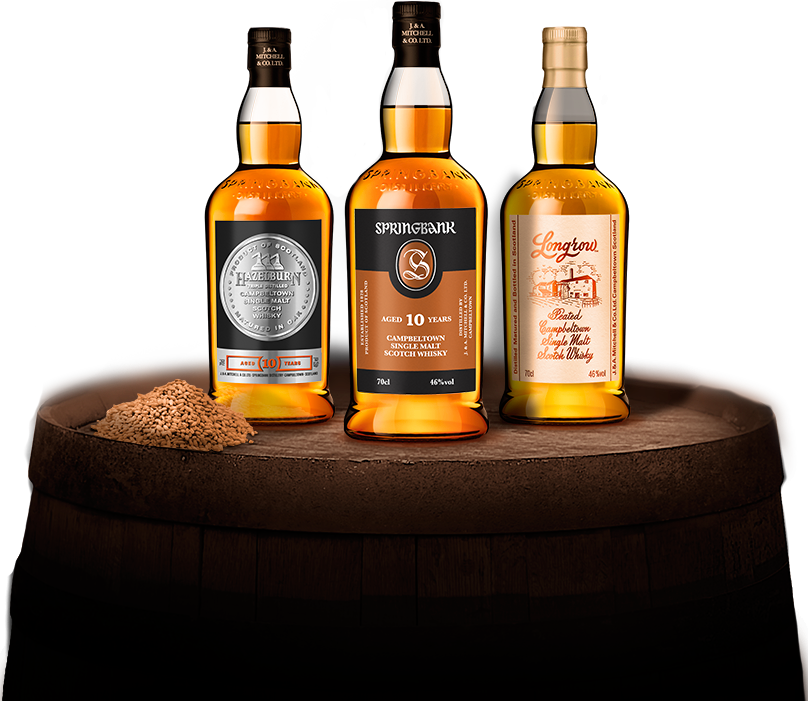
Those of you who are familiar with Springbank will be aware that we produce three different types of New Make Spirit (NMS) and each of these require a different specifications of malt to produce the desired flavour profiles in the mature whisky. For those who are new to the forum I will explain briefly about the differing production techniques required to produce the malted barley for each product.
Hazelburn NMS is produced from a non peated malt which is dried using hot air produced from a light oil burner alone. There are no phenolic compounds present in the malted barley.
Springbank NMS is produced by smoking the malted barley by burning smouldering peat which produces copious amounts of reek for six hours in the kiln prior to using hot air to dry it down to safe storage moisture. This effect of peating for six hours produces a malted barley with a light phenolic content.
Longrow NMS is smoked for an extensive period of up to 48 hours before final drying with hot air. This produces a malt with a very high phenolic content.
Kilns are basically designed to remove moisture from the germinated barley and methods will vary extensively depending on the technologies employed at sites around the country. There will also be differences within the kiln profiles for certain malts but the basic operation is the same. What follows is a very brief outline of the theory of kilning.
There are three stages to kilning or drying the grain, the free drying stage, where large volumes of heated air is passed through the grain bed. As the term suggests the grain gives up it’s moisture quite easily from the outer surfaces. The forced drying stage as it sounds is when it becomes harder to remove the moisture from the grain. Air volume is reduced and the temperature of the incoming air is increased, this continues until the air temperature above the grain bed begins to increase until such a point as there is dynamic equilibrium of the air on and air off temperatures, i.e. the air temperature below the bed and the air temperature above the bed become constant. At this point kilning is complete but this is not the end of the kiln process. There is a further phase called the curing stage where flavour compounds are developed in the malt and are dependent on the requirement of the distiller. For distilling malts this can last for 2 or 3 hours depending on the specification of the required malt.
Should you want to learn more about the kilning process here at Springbank specifically drop us a line and we will gladly let you have further detail on our production techniques,
Stuart